
Accessible public portal
Server-rendered pages use semantic headings, landmarks, tables, forms, and visible focus behavior so the essential record does not depend on a JavaScript application.
Live demonstration
The public meeting record and the staff workflow behind it, in one accessible system.
Staff move an item from intake and review through agenda assembly, the live meeting, adopted minutes, and publication. Residents get fast search, complete packets, stable links, and open data without needing an account.
Public record by design
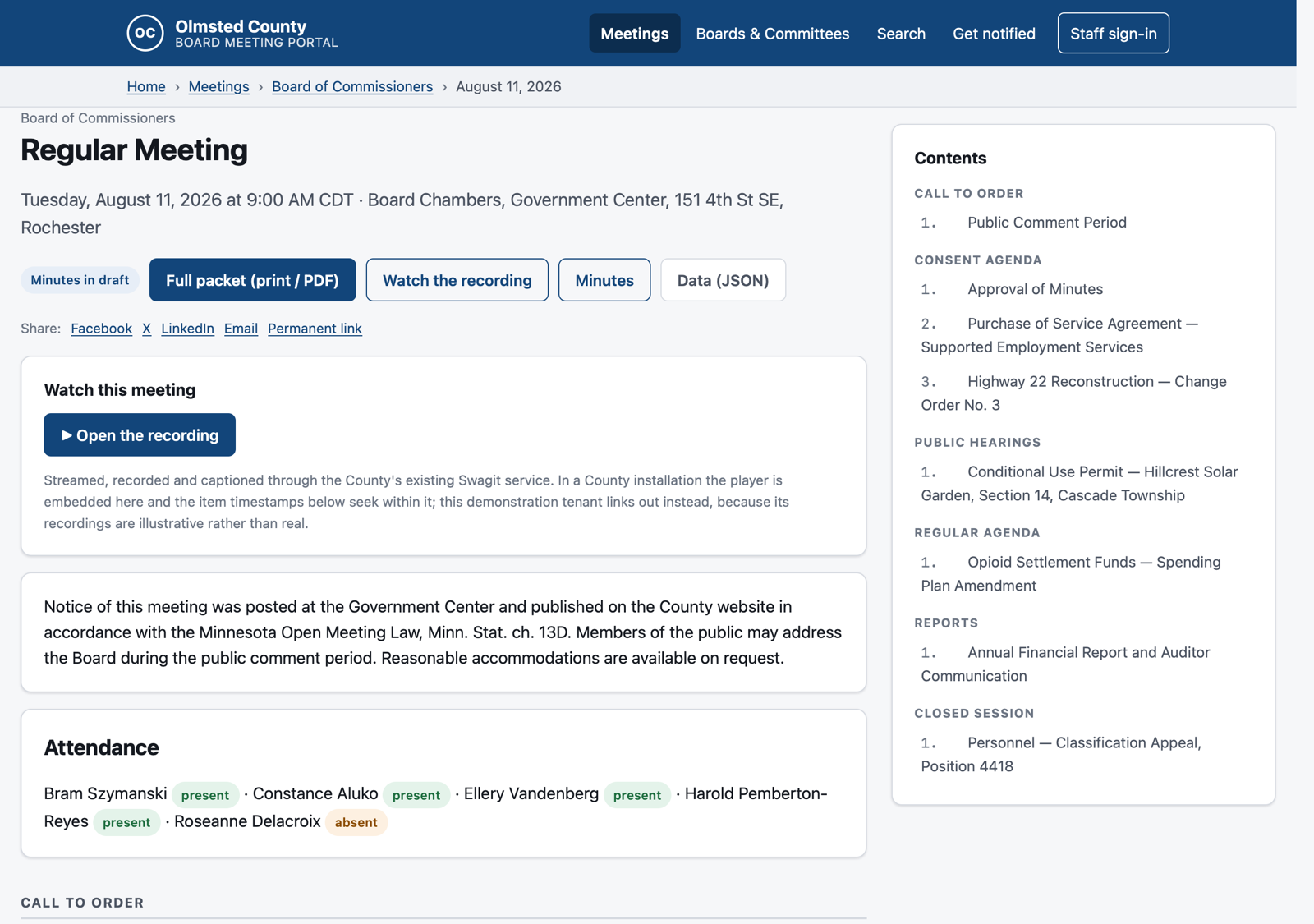
Every public view comes from the same meeting and item records staff use. An edit does not need to be copied into a separate public website, search index, calendar, or feed.
Server-rendered pages use semantic headings, landmarks, tables, forms, and visible focus behavior so the essential record does not depend on a JavaScript application.
Agendas, individual items, supporting files, minutes, boards, and dates stay linked together, with stable destinations residents and staff can return to.
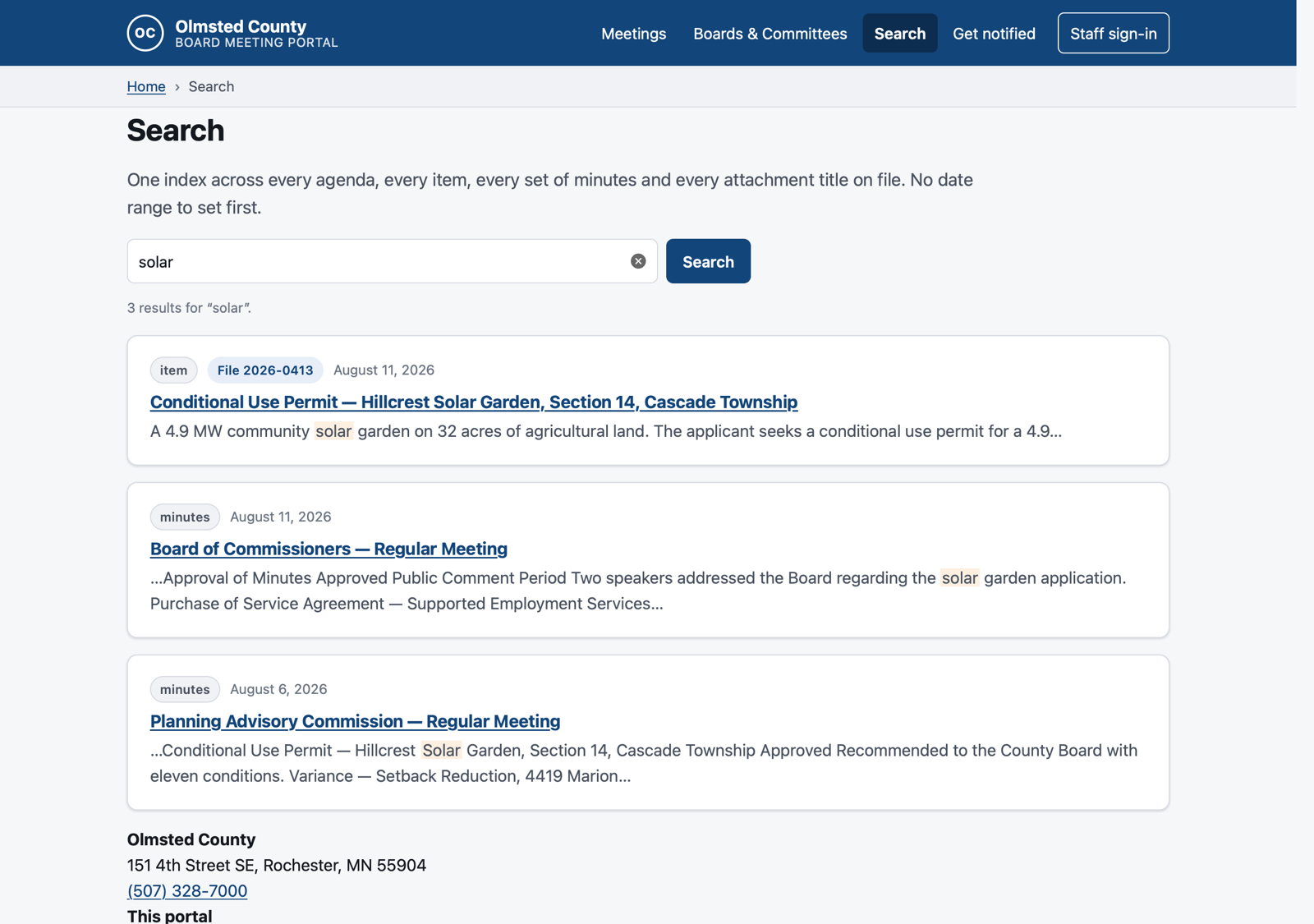
Full-text search reaches meetings and items. JSON, iCalendar, and RSS make the same public information available to other sites, calendars, and readers.
The working product
From draft to adopted minutes
Departments create items, attach materials, route them for review, and see whether each item is ready for an agenda.
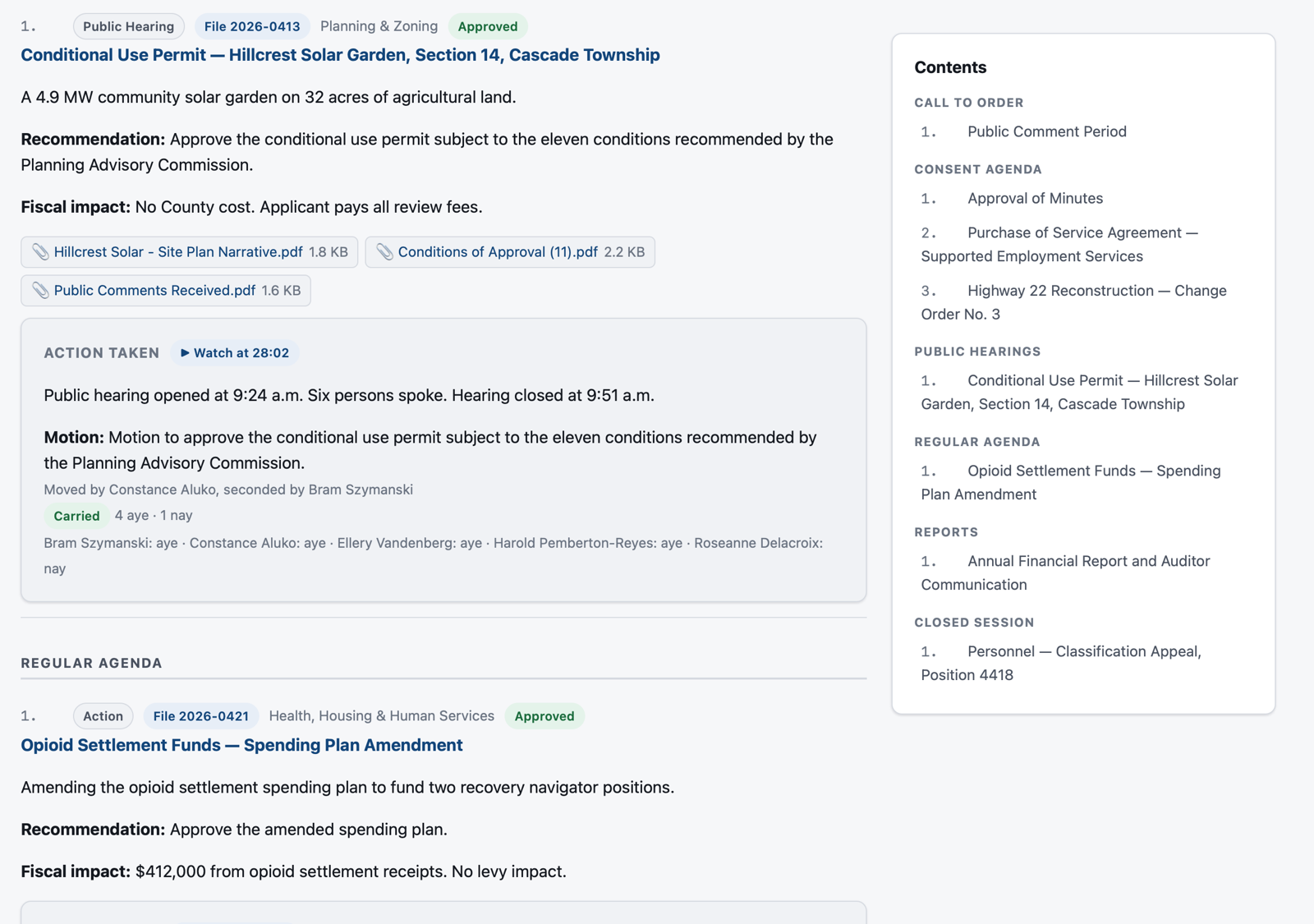
Clerks assemble sections and packets, publish an agenda, record actions, and keep the meeting moving from one item to the next.
Draft minutes move through approval into the permanent public record without re-keying the meeting that already occurred.
Built for public accountability
Role-based staff access. Administrators, clerks, department staff, reviewers, and board members receive the authority their work requires.
Microsoft Entra ID. Production identity can remain with the institution rather than introducing another password store.
Append-only audit history. Administrative and workflow actions remain attributable, including refused operations.
Portable delivery. Source code, structured data, files, and public exports keep the customer from being trapped behind a proprietary portal.
The demonstration includes public records and role-specific staff views built around an invented county.